Beyond the Swatch: A Sourcing Expert’s Guide to Vetting Silicone Leather Suppliers Without Getting Burned
Beyond the sales pitch, a supplier’s true value lies in the chemistry. To properly vet them, focus on three specific markers: VOC emissions, real-world wear data, and pure silicone content versus diluted formulations.
Let’s be honest—sourcing textiles is a bit of a minefield. You receive a beautiful sample in the mail, it feels like silk, and the price is right. But three months into production, the material starts delaminating, or worse, your customers complain about a weird chemical smell. If you’re looking for a reliable silicone leather partner, you can’t just rely on a pretty swatch book.
Beyond the sales pitch, a supplier’s true value lies in the chemistry. To properly vet them, focus on three specific markers: VOC emissions, real-world wear data, and pure silicone content versus diluted formulations.
Doing this right saves you from massive recall costs and keeps your brand’s reputation intact. At Shalite, we’ve seen plenty of companies lose thousands because they chose a supplier based on a 10% price difference rather than technical specs.
Why “Cheap” Silicone is the Most Expensive Mistake You’ll Make
I’ve spent over a decade helping manufacturers move away from toxic PVC. The biggest trap I see? People treat silicone-based leather like it’s just another synthetic fabric. It’s not. It’s a high-performance polymer.
The global bio-based leather market is growing at 7.4% annually. Everyone wants in. But because silicone is more expensive to produce than PU, some factories cut corners. They mix in organic fillers or oils to lower the cost.
The result? The material feels okay at first, but it fails under UV light or high humidity. If your supplier’s price is suspiciously close to PU leather prices, they aren’t selling you high-purity silicone.
Material Performance Comparison: The Cold Hard Facts
Feature
PVC / PU Leather
Standard Silicone
Shalite High-Grade Silicone
Hydrolysis Resistance
2-5 Years
10+ Years
15+ Years (Jungle Test)
Skin Safety
Contains Phthalates
Food-grade safe
Medical-grade safe
Stain Removal
Hard (needs chemicals)
Easy (water/soap)
Instant (even permanent marker)
Cold Crack
-10°C
-30°C
-50°C
4 Red Flags to Watch for When Vetting a Factory
When you’re talking to a silicone leather manufacturer, don’t ask if they are “good.” Ask for proof. Here is my personal “gut-check” list:
1. The “Ghost” Lab Reports
If a supplier sends you a test report from 2018, that’s a red flag. Formulations change. You want to see REACH and RoHS certifications from within the last 12-18 months. These documents prove the material is free from heavy metals and restricted chemicals. You can check the latest REACH requirements on the European Chemicals Agency (ECHA) website.
2. The Smell Test (Literally)
One of the main reasons people buy silicone leather products is because they are low-VOC. When you open a sample roll, it should be virtually odorless. If it smells like a nail salon or a chemical plant, that’s a sign of residual solvents. High-quality silicone uses a solvent-free casting process.
3. Vague Answers About the Backing
The “leather” part is just the top layer. The backing fabric (polyester, microfiber, or cotton) dictates how the material behaves during upholstery. If a silicone leather factory can’t tell you the exact gram weight or tensile strength of the backing, they aren’t controlling their supply chain.
4. Zero Customization Flexibility
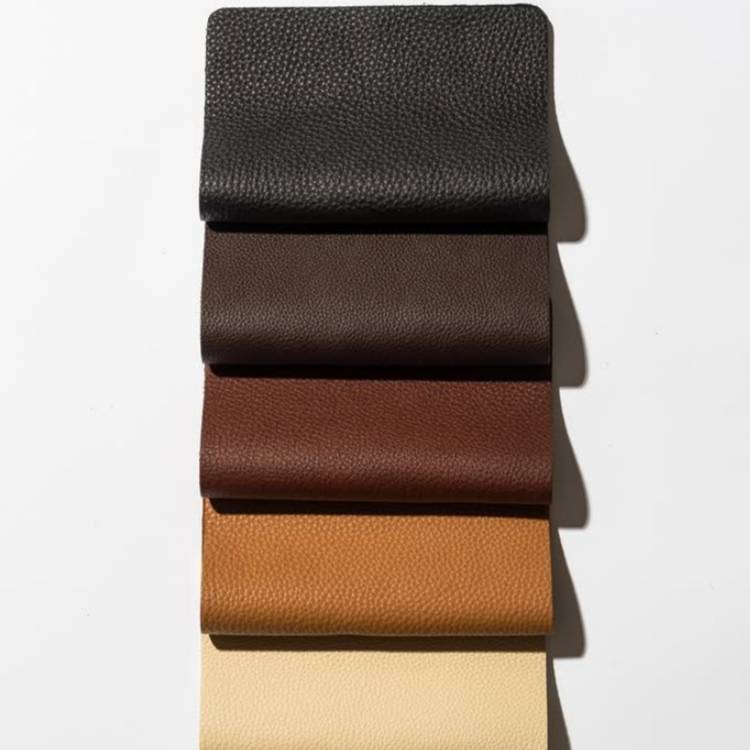
Top-tier suppliers should offer custom color silicone leather. If they only offer five stock colors and refuse to match your brand’s Pantone, they are likely a middleman, not the actual manufacturer.
Expert Insight: “I once worked with a client who bought ‘silicone’ for an outdoor lounge project. The supplier was cheap, and the samples looked fine. But the factory had used a low-quality UV stabilizer. Within six months of Florida sun, the white leather turned a sickly yellow. The ‘saving’ of $2 per meter ended up costing them $40,000 in replacements.” — Shalite Solutions Team
How to “Torture Test” Your Samples
Don’t just rub the material with your thumb. If you want to see if it’s actually durable, you need to be a bit aggressive. Here is how I test materials in my office:
The Permanent Marker Test: Take a Sharpie. Write on the sample. Let it sit for an hour. Try to wipe it off with a dry cloth, then a wet one. Genuine silicone leather is non-polar, meaning the ink can’t “grip” the surface. It should come right off.
The Alcohol Rub: Rub the surface 50 times with a cloth soaked in 70% isopropyl alcohol. Poor quality coatings will start to soften or become “gummy.” High-grade silicone won’t even flinch.
The Flex Test: Fold the material tightly and staple it. Leave it for a week. When you remove the staple, the material should bounce back without a permanent crease or any cracking in the grain.
The Environmental Edge: Is it Actually “Green”?
Sustainability is a huge buzzword, but in our industry, it’s about chemistry. Traditional synthetic leathers use DMF (Dimethylformamide), which is nasty stuff for factory workers and the environment.
A true silicone leather manufacturer uses a thermal curing process. No solvents, no water pollution, and significantly lower energy consumption. When you’re vetting a supplier, ask for their waste management policy. A factory that cares about its environmental footprint usually has much better quality control on the production line too.
Best Practice: The “Master Sample” Rule
Once you approve a sample, cut it in half. Send one half back to the factory and tell them, “This is the gold standard for my order.” Keep the other half in your desk. When the bulk shipment arrives, compare them immediately. This prevents “quality creep,” where the factory slowly lowers the spec over multiple orders.
Why Your Tech Team Will Love Silicone
It’s not just about the look. For the engineers and product designers out there, silicone is a dream material.
Flame Retardancy: It’s naturally flame-resistant. You don’t need to add toxic brominated flame retardants to meet safety codes like FMVSS 302.
Thermal Stability: It doesn’t get scorching hot in the sun or brittle in the cold.
Skin-Friendly: It’s hypoallergenic. This is why it’s used in medical devices and baby products.
Working with Shalite: Our Approach
We don’t believe in just selling rolls of fabric. We believe in solving problems. Whether you need a specific stretch for automotive seating or a high-rub count for a busy airport lounge, we tailor the formulation to the job. We know that if your product fails, we fail. That’s why our testing protocols are some of the toughest in the industry.
FAQ: What Big Buyers Actually Ask
Q1: Does silicone leather really beat recycled PU on sustainability?
A: Yes. “Recycled” PU improves raw material sourcing, but the core chemistry still involves polyurethane plastics and binders. Pure silicone is inherently solvent-free and doesn’t breakdown into microplastics the way synthetic polymers do.
Q2. Can it handle medical-grade disinfectants?
Absolutely. One of the biggest wins for silicone is in healthcare. You can clean it with bleach or hydrogen peroxide solutions repeatedly, and it won’t crack or discolor. Most PU leathers will fail a “bleach test” within weeks.
Q3. Does it get “sticky” over time?
Only if it’s poor quality. High-purity silicone is incredibly stable. The “stickiness” people sometimes associate with old rubber is usually caused by plasticizers leaching out—something that doesn’t happen with Shalite’s silicone leather.
Q4. How do I know I’m getting a fair price?
Look at the weight and the silicone content. If a supplier is offering a price that is 30% lower than everyone else, they are likely using a thin silicone coating over a cheap PVC base. Always ask for a cross-section image of the material.
Q5. What is the lead time for custom colors?
Usually, for custom color silicone leather, you’re looking at 3-4 weeks. This includes the lab-dip approval process. If a factory promises custom colors in 5 days, they are likely just painting over existing stock, which will peel later.